In Short
By introducing clearer value messaging, contextual sign-ups, and default setup during onboarding, we’ve seen early signs of higher adoption, fewer payment issues, and a smoother overall experience.
As part of optimising the payment experience for invoice-based customers across the Eurozone, I led the design efforts to introduce SEPA Direct Debit (SDD) as a recurring payment option. The initiative aimed to tackle a growing operational challenge: a manual, error-prone invoicing process that caused high reconciliation costs, hundreds of support tickets, and significant revenue delays.
Goal: lowering transaction costs, reducing manual reconciliation, and improving customer satisfaction across the Eurozone.
Research: Building on earlier research into payments and invoicing, along with interviews and data from the Finance and Support teams, we gained an understanding of customer needs and pain points.
Problem: How do we get our customers to adopt SEPA Direct Debit as their preferred payment method. SDD offers clear benefits for both us and our customers including lower processing costs, fewer payment failures, and a smoother experience. The challenge is making those benefits visible, compelling, and easy to act on.
Customer incentives
Emotional Jobs:
- Peace of mind – “I want to feel confident my payments are handled automatically and securely.”
- Trust & security – “I want to know I’m protected by EU regulations and can get a refund if needed.”
What customers want to get done:
- Pay recurring bills without manual effort – “Help me set up my payments once so I don’t have to think about them every month.”
- Ensure payments are made on time – “Make sure my payments always go through, even if I forget or I’m away.”
- Simplify financial administration – “Reduce the number of payment reminders and manual transfers I need to manage.”
- Avoid payment disruptions – “Prevent my subscription/service from being interrupted because of missed payments.”
- Reduce payment costs – “Let me avoid card transaction fees or currency conversion costs.”
Ideation
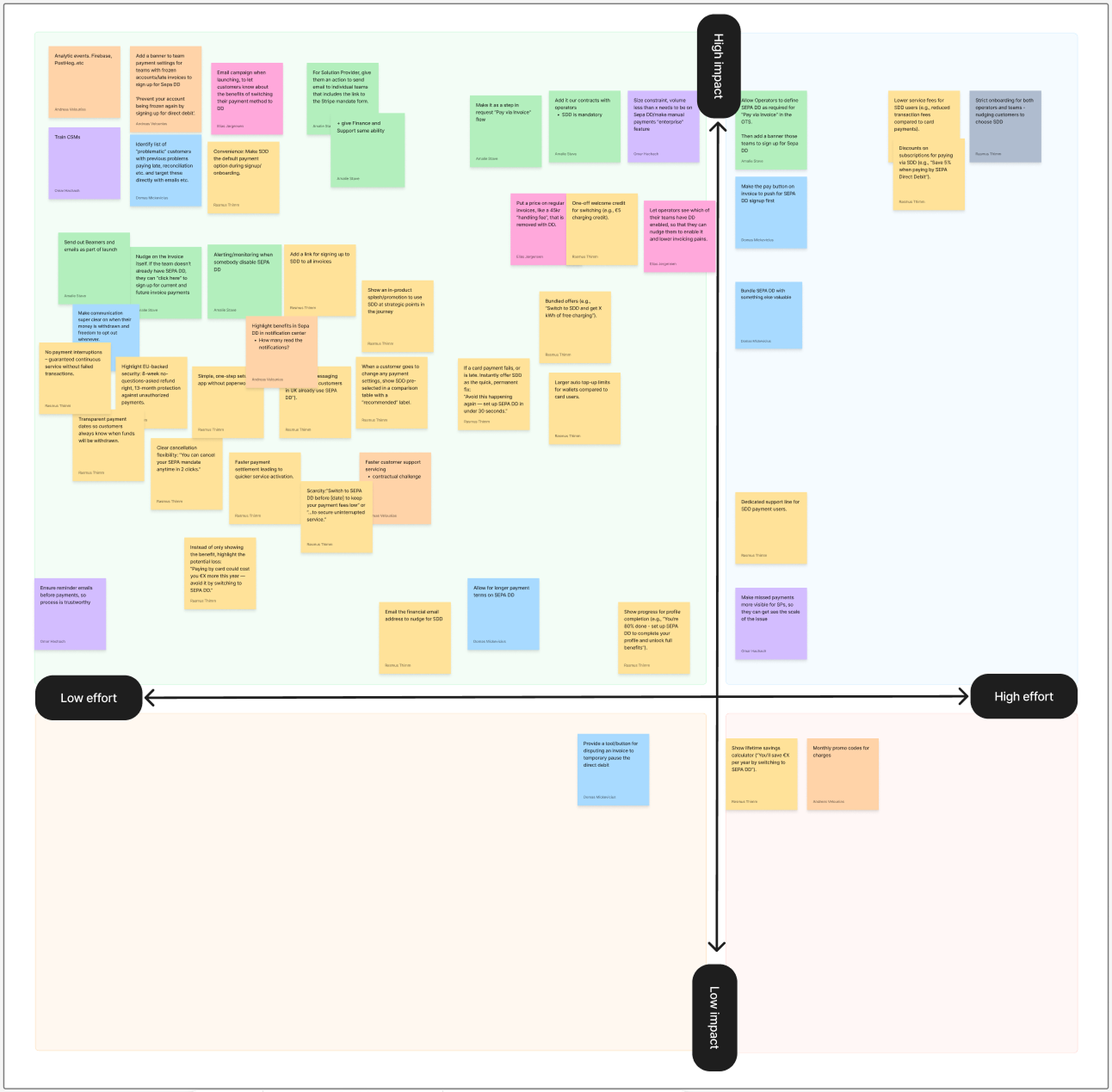
Armed with customer insights, we kicked off ideation. I led a workshop with the team, PM, and EM, where everyone contributed ideas and perspectives. To make sure we covered all possible angles, I also used ChatGPT to generate additional ideas – some of which no one else had considered.
To bring focus and alignment, we organized all ideas in an impact-effort matrix, helping us prioritize high-value opportunities and rule out low-feasibility concepts.
Prioritising and refining
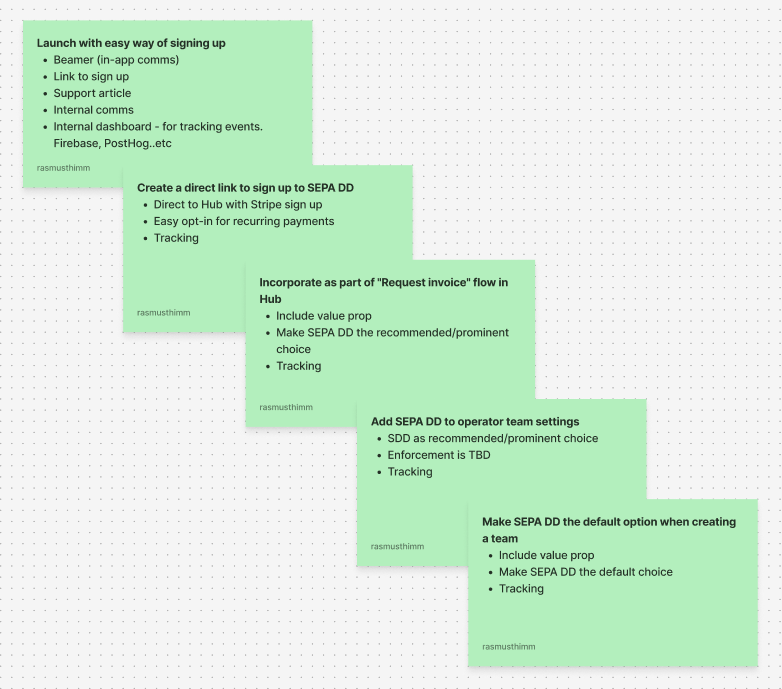
In a second workshop, we revisited the ideas together, discussed their potential impact, and aligned on which ones to take forward – refining and specifying them to ensure shared understanding before further design work.
Inspiration
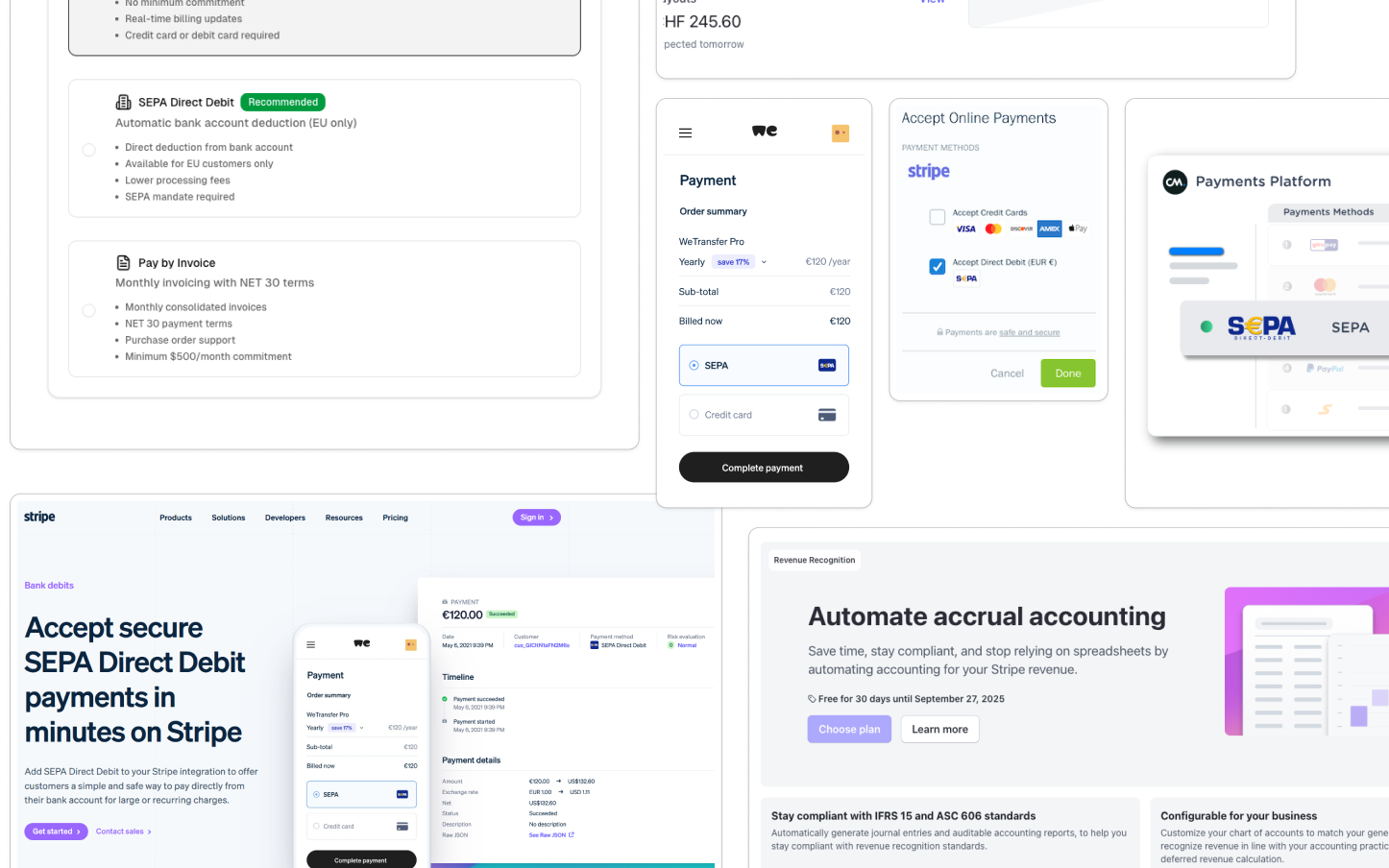
To inform my direction, I explored how other platforms handle recurring payments and mandate setup. By analyzing adjacent services, I identified common UX patterns and opportunities to create a smoother, more transparent experience for our users.
Analysing current flow
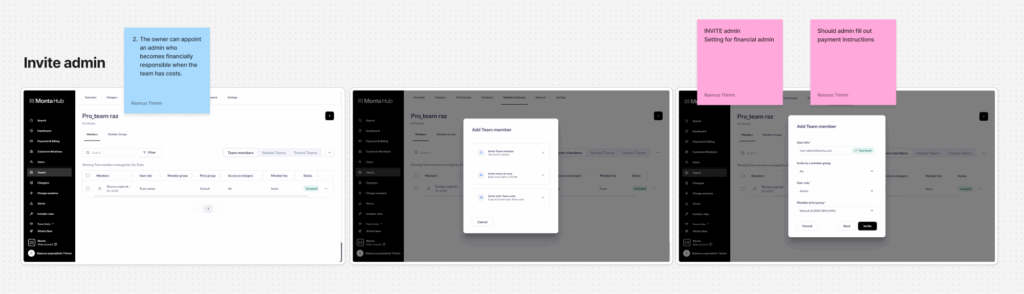
I analysed and annotated the existing payment and invoicing flows to identify pain points and dependencies. This allowed me to seamlessly merge the new SEPA Direct Debit initiatives into the current experience while maintaining consistency and minimising disruption.
Solutions
With priorities aligned, I mapped how the new SEPA Direct Debit elements – such as mandate setup and payment confirmation – could integrate seamlessly into existing invoicing flows. Working closely with Product and Engineering, we iterated on several flow variations to balance usability with technical feasibility, ensuring the experience felt native and frictionless within the product.
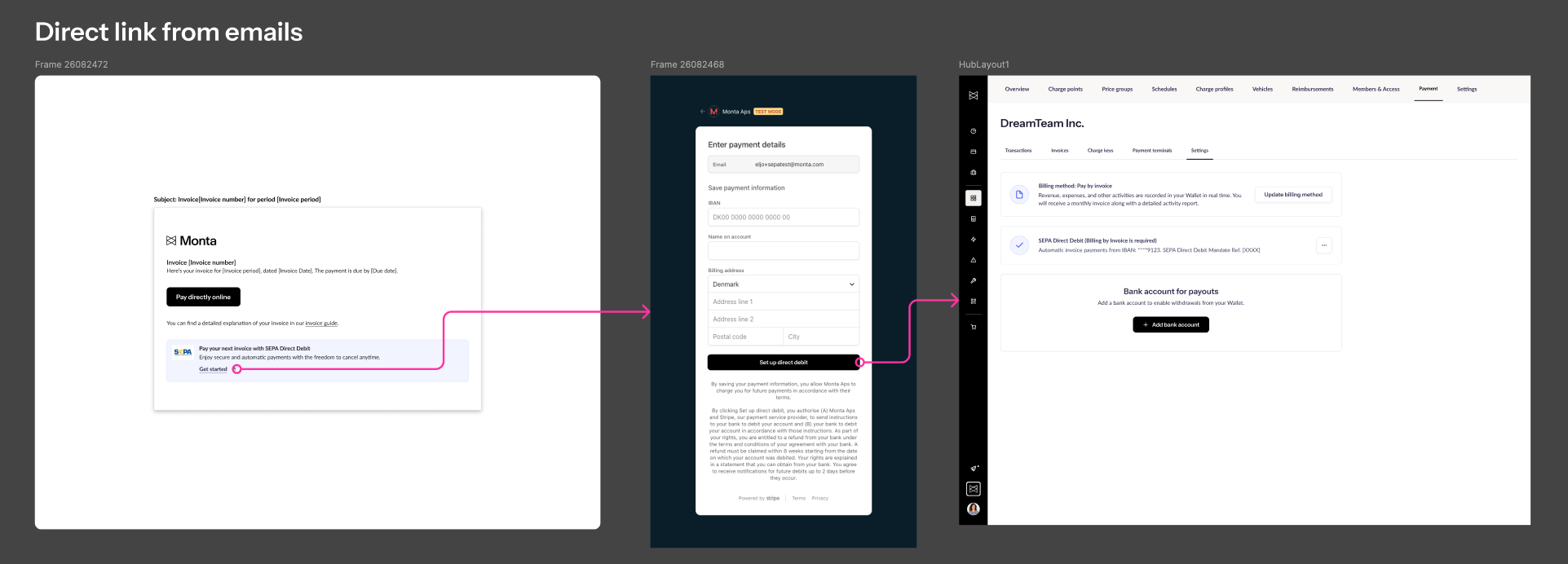
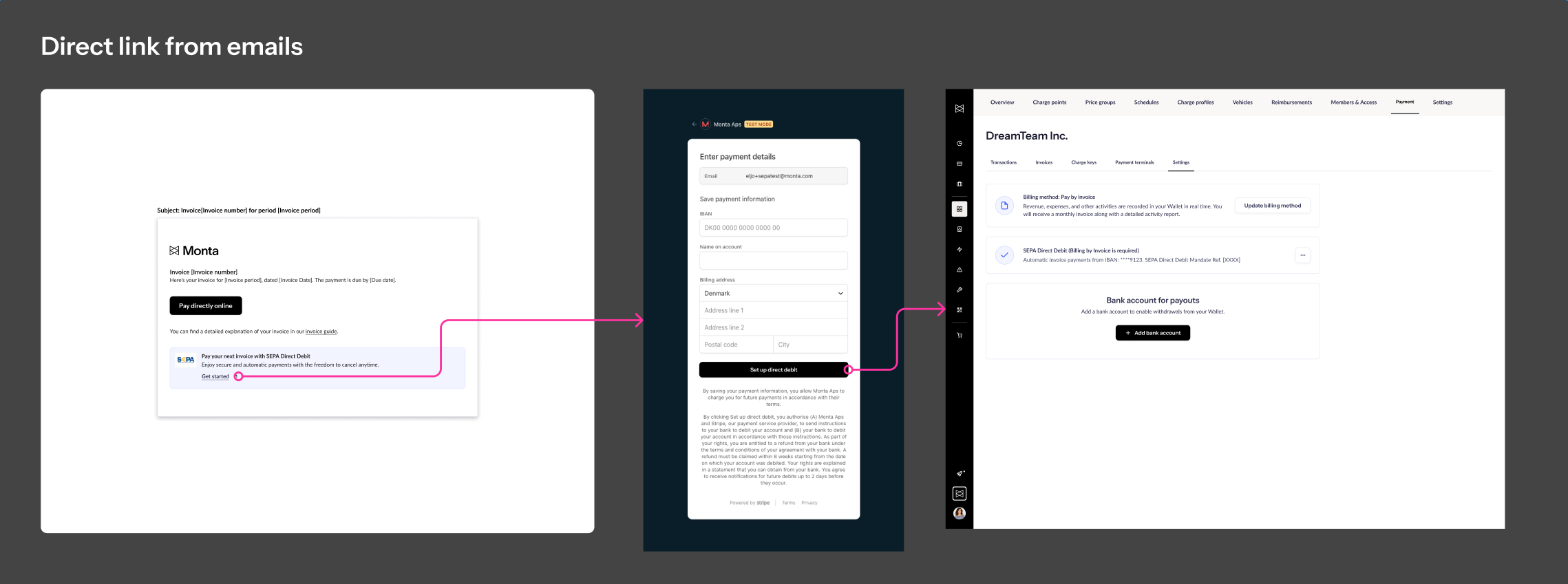
Direct link in invoice emails
The invoice email includes a promotion with a direct link for customers to sign up for SEPA Direct Debit, encouraging them to pay their next invoice through SEPA DD. The message is shown in a highly relevant context, utilising moment of high intent, right when customers are already engaging with their invoice.
Sign-up Flow with Value Proposition
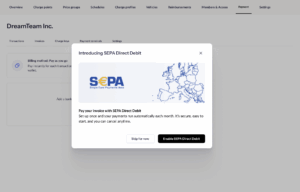
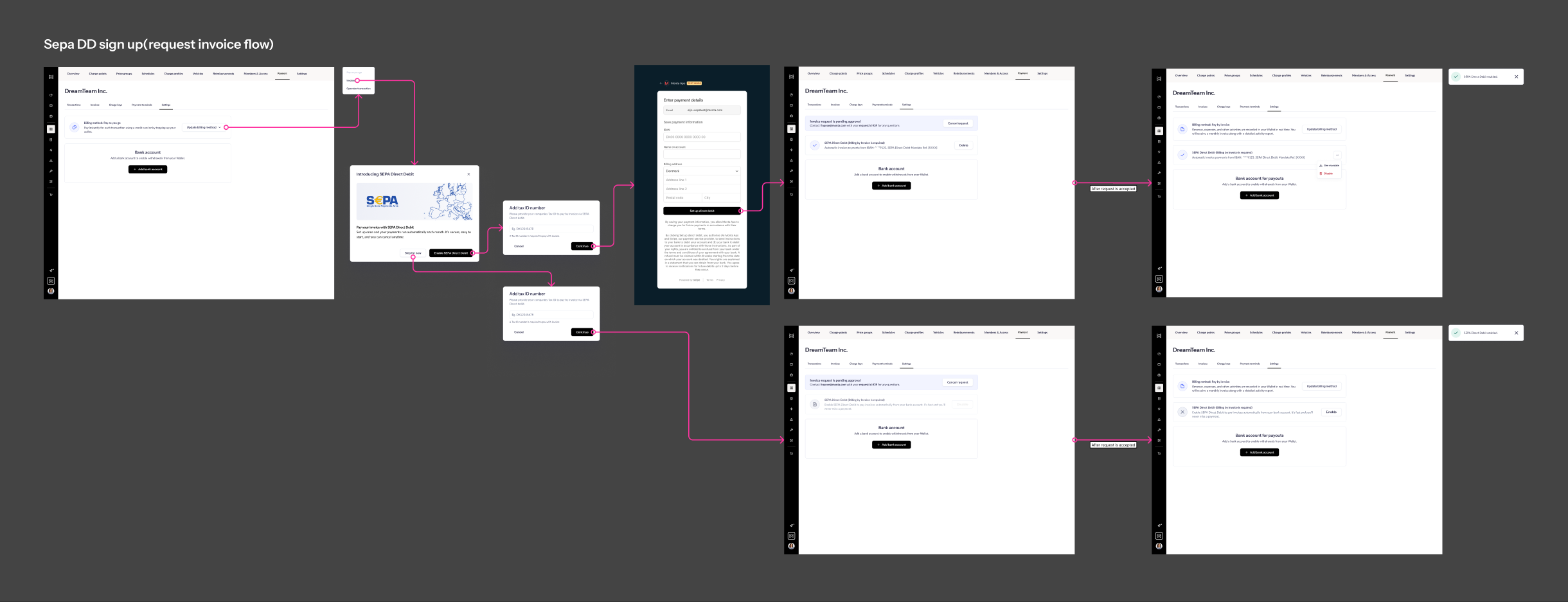
To drive adoption of SEPA Direct Debit, we designed a dedicated sign-up flow that clearly communicates its value and integrates naturally into the existing experience. The flow introduces SEPA DD with a concise explanation of benefits, such as lower transaction fees, automatic payments, and fewer failed invoices – helping customers understand why it’s worth switching.
From the customer’s perspective, the flow is simple and reassuring. After selecting SEPA DD, users are guided through a short and transparent form to authorise the mandate. Contextual messaging and confirmation states reinforce trust and give clear feedback at each step.
Team creation
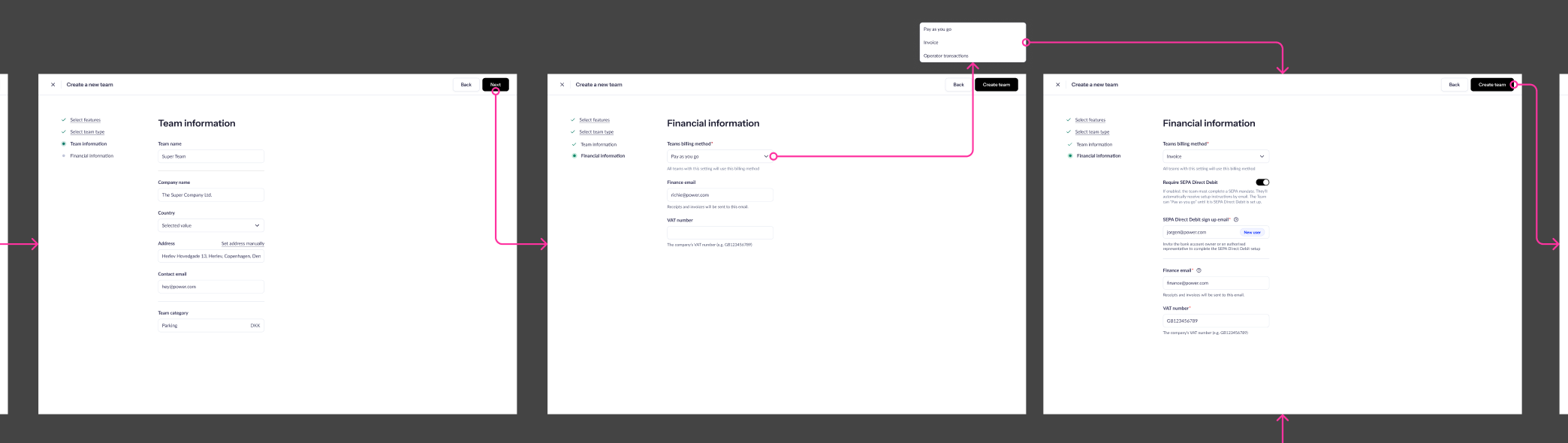
To increase adoption from the start, SEPA Direct Debit was introduced as the default payment option when creating a new team in. This approach leverages the setup phase, a moment when users are already configuring essential details, to present SEPA DD as the easiest and most reliable choice.
By making SEPA DD the default, we reduce friction later in the billing process and help customers establish automated payments early on. Clear messaging highlights its advantages, such as simplified invoicing and fewer manual tasks, while still allowing users to switch to alternative methods if preferred. This design choice not only streamlines onboarding but also supports long-term retention by embedding a trustworthy, low-effort payment setup from the beginning.
Conclusion
We’ve made SEPA Direct Debit the default payment option when creating a team in Operator Team Settings to simplify onboarding and reduce friction in the payment setup flow. This change supports a more consistent experience across markets and encourages operators to adopt the most automated and reliable payment method.
We’re tracking the results from these initiatives closely, and although it’s still early days, we’re seeing a positive trend towards higher SEPA DD adoption rates, more teams being created with SEPA Direct Debit as the payment method, and fewer payment-related support tickets.